Look around next time you pull up to a commercial building. The car park’s probably fine, the sign’s up, maybe there’s a tired row of shrubs along the front. Nothing offensive, but nothing that makes you stop either. Now imagine that same building with a crisp entryway, some decent greenery, a spot to sit outside that doesn’t feel like an afterthought. Whole place feels different, right? More money. More serious.
We’re seeing the same thinking reshape residential design, where Australian homes are moving beyond the four walls and treating the backyard like another room. Commercial properties are just starting to catch up, and the ones that get it right are already pulling ahead.
That’s what we’re talking about here. Your outdoor space isn’t dead air. It’s an asset you’ve probably been ignoring. We’ll dig into why it matters so much, what upgrades actually pay off, and how to stop treating the outside of your property like an afterthought.
Honestly, it’s because you don’t see the problem anymore. You rock up every morning, walk the same path, and your brain stops registering the cracked pavers or the garden bed that’s 90% weeds. It’s just… there.
Also, people think landscaping is a luxury spend. Fluffy stuff. Something you do when business is booming and you’ve got spare cash lying around. That’s backwards. A tired-looking exterior quietly bleeds value every single day. Tenants drive past and think “nah”. Customers subconsciously file you under “average”. Staff don’t hang around after work because the “breakout area” is a patch of gravel next to the bins.
A well thought-out commercial landscaping isn’t a garden project. It’s a business decision. And the ROI? Way better than you’d guess.
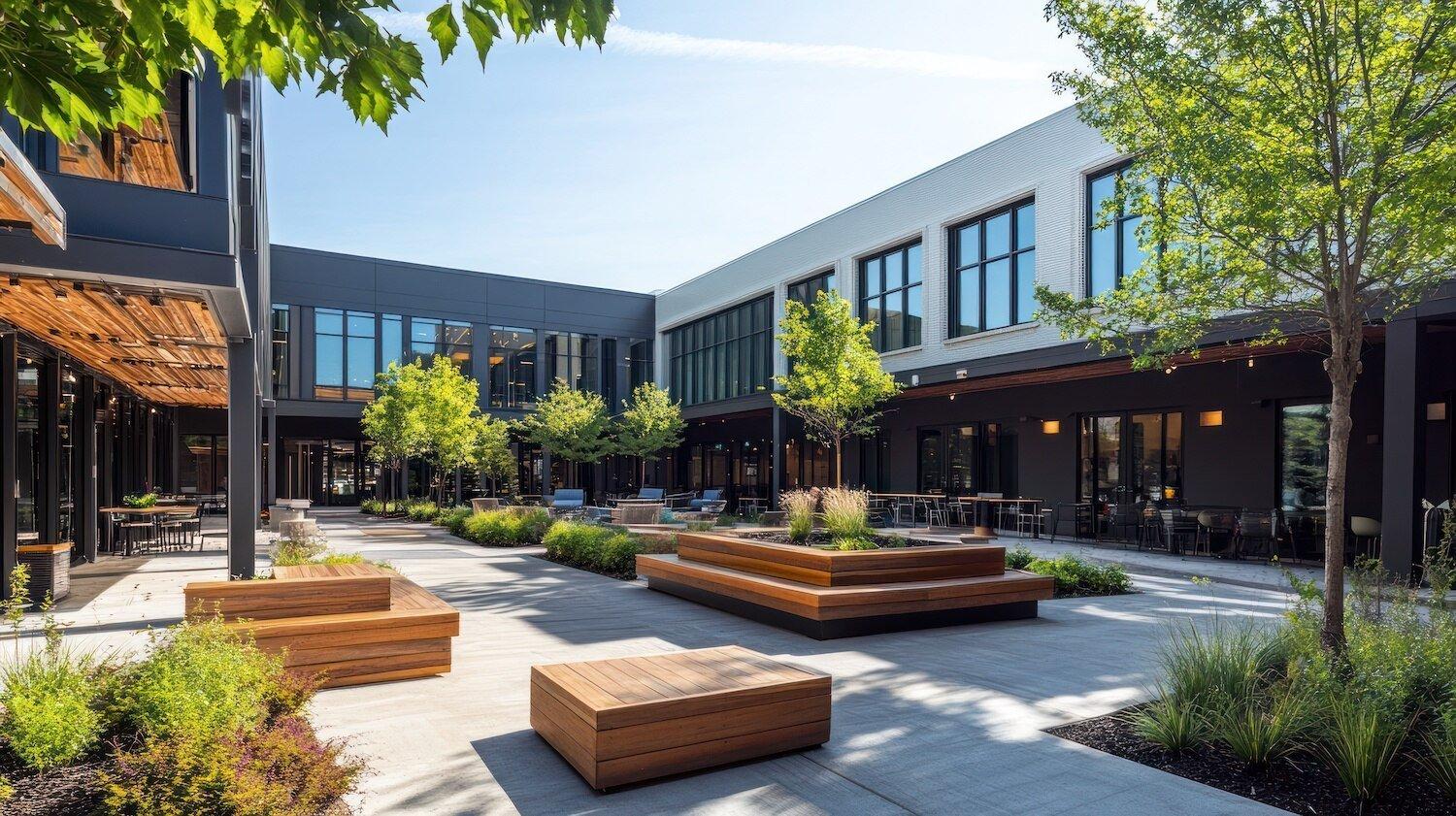
Square metres and location still matter, sure. But valuers also look at presentation, functionality, and how well the outdoor bits work. A courtyard that people actually use adds usable square footage, even if it’s not under a roof. Good lighting and clear pathways make the place feel safe and professional. Mature planting makes it look established, like someone’s looked after the joint for years.
We’ve seen ordinary 80s office blocks get a facelift with new paving, some native planting, and a shaded seating area, and suddenly they’re getting higher rent and shorter vacancy windows. That’s not theory. That’s just what happens when a property looks loved.
Skip the high-maintenance flower beds that look great for two weeks then turn into a crisp. Think hardscaping: paths, low retaining walls, defined parking edges, a decent entrance statement. Stuff that lasts and doesn’t demand much.
Lighting’s a sneaky good one. A well-lit path to the front door, maybe a couple of uplights on a feature tree, makes the place feel premium after dark and it’s a safety win too. Tenants love feeling secure.
Plants? Pick things that can handle Melbourne’s mood swings. Natives like lomandra, correa, dianella-they don’t throw a tantrum when it’s 40 degrees or bucketing rain. Less maintenance, fewer replacement costs. A smart commercial landscape Melbourne design always thinks five years ahead, not five weeks.
And don’t forget drainage. Boring, yeah. But water sitting against your building or pooling in the carpark eats away at your investment faster than anything. Get that right from the start and you dodge a whole lot of expensive nonsense later.
Tenants want a place their staff don’t hate. A shaded spot to eat lunch that isn’t a hot metal bench. A clear, clean entrance that doesn’t embarrass them when clients visit. Maybe some bike racks. Nothing wild.
Customers want to feel welcome the second they pull in. A tidy, well-lit path from the carpark to the door. Some greenery to soften the concrete. If there’s a seating area, they’ll linger—and lingering means spending money.
We’ve asked people this stuff. They rarely say “I need a water feature.” They want it to feel safe, clean, and looked after. Do that, and you’re already ahead of most properties on the street.
Because it’s boring and nobody budgets for it. But here’s the deal: a neglected landscape screams “this place is struggling.” Dead plants, weeds through the paving, mulch blown all over the footpath. Tenants notice. Their clients notice. It chips away at the property’s reputation bit by bit.
Good maintenance doesn’t mean a gardener there every week. It means choosing tough plants in the first place, setting up simple irrigation, and having someone swing by quarterly to catch issues before they get expensive. The install is day one. The next ten years are what make or break the value.
A few things that punch way above their weight:
None of these need a big budget or council approval. But together they flip a property from “meh” to “hmm, these people care.”
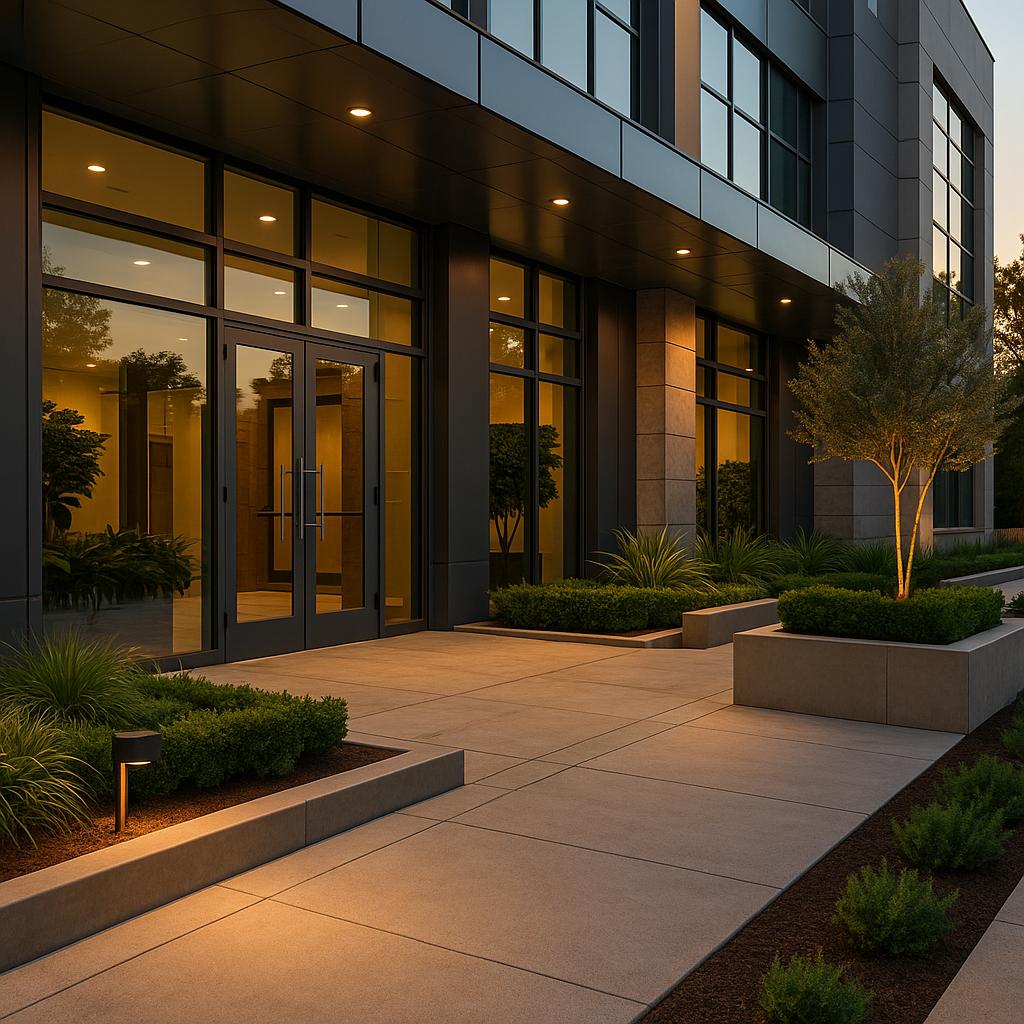
If you’re asking yourself that, probably now. Seriously. If you’re about to lease to a new tenant, a freshly landscaped property will command better rent and attract better occupants. If you’re selling, a polished exterior boosts the valuation and cuts time on market. If the place has looked the same for ten years and you’re starting to lose tenants to newer builds down the road, that’s your sign.
You can phase it. Do the entrance this year, the courtyard next year. Spread the cost. Just don’t wait until the place looks so shabby it’s actually turning people away. At that point you’re losing money while you procrastinate.
A mow-and-blow guy will keep things tidy. That’s fine. But a team that actually understands commercial work looks at things differently. They think about foot traffic, sightlines, how water drains, which materials won’t crack after three summers, what a tenant’s staff will actually use.
At Bullscapes, we’ve done enough of these projects to know what works and what’s a waste of money. We’ll tell you if something’s overkill. We’ll suggest native stuff that doesn’t die the first time Melbourne throws a heatwave at it. And we won’t try to sell you a garden that needs a full-time horticulturist to survive.
Yeah. A sharper-looking property rents faster, holds tenants longer, and gets better valuations. It’s not magic, it’s just making the place feel worth more.
The entryway. Clean it up, add some fresh mulch and a couple of pots, make sure the lighting works. You’d be surprised how far that gets you.
Pick tough, low-maintenance plants. Put drip irrigation on a timer. Mulch heavily. Have someone do a proper check every few months. That’s 90% of it.
Definitely. A good landscape team will help you plan it so you tackle the most important bits first and spread the spend.
Commercial experience, not just residential. Someone who understands drainage, hardscaping, and long-term maintenance. And they should talk straight, not just throw glossy pictures at you.
Your commercial property’s outside is working either for you or against you, every day. If it looks tired and unloved, it’s quietly costing you money. If it’s sharp and functional, it’s pulling in better tenants and boosting your bottom line without you even thinking about it.
If you’re ready to stop ignoring the outdoor bits and actually make them work, give a call. We provide service of Commercial Landscaping Melbourne that last, and we’ll give you an honest take on what your property needs. No pressure, no fluff. Let’s chat