Your pavers are usually sinking or moving because something underneath them has shifted or failed. Poorly compacted base, water washing away the bedding material, or weak edge restraints are some of the most common causes.
The good news is that the problem can usually be fixed. But simply lifting and resetting the pavers may not solve it for long.
So, what is causing your pavers to sink or move, and how can you fix the problem properly? Let’s look at the common causes and what needs to be done to stop it happening again.
A few things usually work together to mess things up. Let’s break them down.
This is the big one. Pavers need a solid, compacted base to sit on. If the ground wasn’t dug out deep enough, if the road base wasn’t compacted properly, or if someone used the wrong material, the pavers will eventually settle unevenly. It’s not a matter of if, it’s when.
Water is paving’s worst enemy. If water pools under or around your pavers, it washes away the bedding sand and leaves empty spaces underneath. The pavers then drop into those gaps. Melbourne’s clay soils make this even worse because clay holds water and swells when wet, then shrinks when dry. That constant expanding and contracting causes movement.
Pavers need something solid holding them in around the edges. Without proper edge restraints, they spread outward under pressure. Gaps appear. Individual pavers start shifting. It’s like trying to hold sand in place without a border.
Roots from nearby trees can grow under your paving and push it up from below. Or they decay and leave voids behind. Older trees with big root systems are usually the culprits here.
If your driveway wasn’t built to handle vehicle weight, the base will compress over time. Even foot traffic on a poorly prepared patio can cause sinking in soft spots.
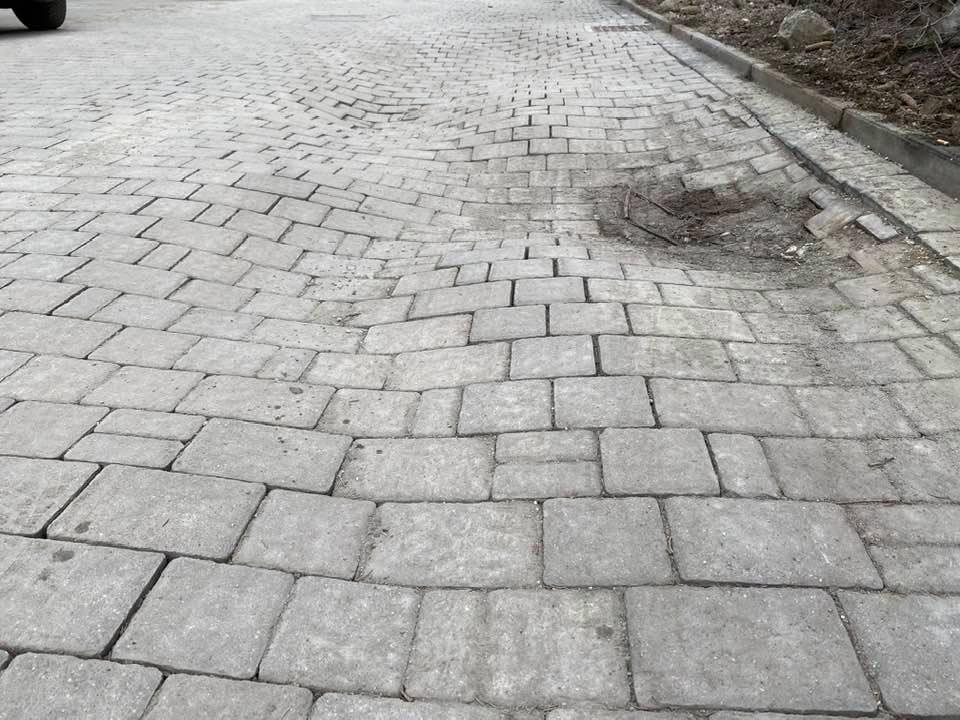
The symptoms can point you toward the real issue.
Signs of a base problem:
Signs of a drainage problem:
Most of the time, you’ll see both problems at once. Water gets underneath, washes away the base material, and then the pavers sink. That’s why drainage matters just as much as the base itself.
Think of paving like building a house. The pavers are the roof, but the base is the foundation. If the foundation is wrong, nothing else holds up.
Proper base preparation involves several steps:
Excavation. The ground needs to be dug out to the right depth. For a driveway, that’s usually around 300 to 400 millimetres. For a patio or pathway, 150 to 200 millimetres often does the job.
Compaction. The natural soil underneath needs to be compacted so it doesn’t settle later. This is especially important in Melbourne where clay soils can be unpredictable.
Road base. A layer of crushed rock or road base gets spread and compacted. This creates a stable, load-bearing surface that won’t shift.
Bedding sand. A thin layer of sand goes over the road base. The pavers sit in this sand, which allows for minor adjustments to get the surface level.
Edge restraints. Concrete or metal edging gets installed around the perimeter to keep everything locked in place.
Skip any of these steps or do them badly, and the pavers won’t last. Simple as that.
Drainage is all about moving water away from your paving.
Every paved area needs a slight slope, or “fall,” so water runs off the surface. The standard fall is around 1 to 2 percent—that means a drop of 10 to 20 millimetres for every metre of paving.
If water doesn’t drain off the surface, it pools and eventually seeps through the joints. Once water gets under the pavers, it washes away the bedding sand and creates voids. The pavers sink into those empty spaces.
Good drainage also means managing water at the edges. A drainage channel or strip drain along the edge of a driveway or patio can capture water before it runs onto the paving and causes damage.
Quick Look: Common Causes of Sinking Pavers
What Is Happening | Why It Matters | How to Fix It |
Poor base compaction | Base settles unevenly, pavers sink | Dig out and recompact properly |
Inadequate drainage | Water washes away bedding sand | Add falls, install drainage channels |
Missing edge restraints | Pavers spread outward, create gaps | Install concrete or metal edging |
Tree roots | Roots lift pavers or create voids | Remove roots or install root barrier |
Heavy vehicle traffic | Base compresses under weight | Use thicker base for driveways |
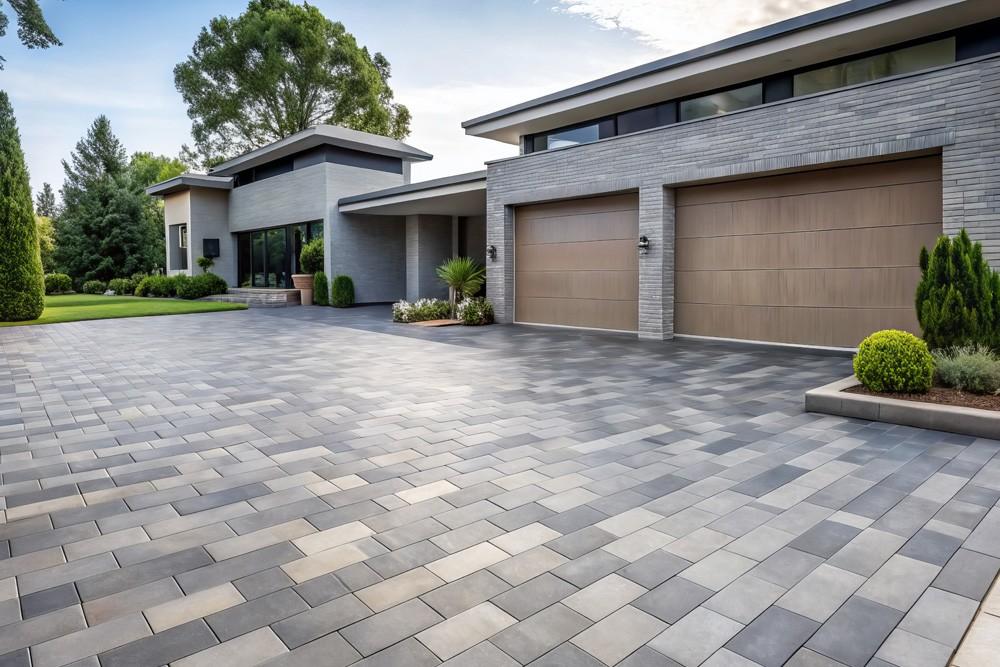
The right paving contractor melbourne makes all the difference. A good one won’t just lay pavers, they’ll prepare the base properly, sort out drainage, and make sure the job lasts.
Look for someone who:
At Bullscapes, we’ve been installing paving across Melbourne for over 20 years. We know that how paving performs long-term depends just as much on what sits underneath as the pavers themselves. Correct excavation, compacted road base, appropriate bedding material, drainage falls and secure edge restraints, these are the things that prevent sinking, movement, uneven joints and water pooling. We assess these structural details before installation begins, rather than simply laying pavers over an unsuitable surface.
We work across Melton, Caroline Springs, Bacchus Marsh, Rockbank, Sunshine and surrounding Melbourne suburbs. Whether you’re replacing ageing pavers, building a new driveway or completing a full backyard transformation, we design and install paving that brings the entire outdoor space together.
Sinking and shifting pavers aren’t just an eyesore, they’re a trip hazard and a sign that something is wrong underneath. The good news is that with the right approach, the problem can be fixed properly.
If your pavers are sinking, moving, or showing signs of drainage problems, contact our team at Bullscapesfor a free consultation. We’ll assess your paving, identify the underlying issues, and give you a clear plan to get it sorted.
Give us a call, we’ll help you get your paving back to how it should be.
You can, but it’s usually a temporary fix. If the base underneath is still unstable, the pavers will sink again. Lifting and re-laying works for minor settling, but ongoing problems need the base addressed properly.
Depends on the size of the area and how much work is needed. A simple re-level might cost a few hundred dollars. If the whole base needs redoing, you’re looking at a few thousand. Get a few quotes from paving contractors in Melbourne to compare.
With proper installation and a solid base, paving can last 20 to 30 years or more. The pavers themselves can last even longer. What really determines lifespan is the base and drainage underneath.
Yes. The key is proper installation from day one. That means excavation to the right depth, proper compaction, a solid road base, correct falls for drainage, and edge restraints. Cutting corners on any of these will cause problems down the track.