
That garden bed out front of your office? The one nobody’s touched in years? It’s doing damage. Not just to the look of the place, to how people see your business.
Think about it. Clients pull in. New hires show up on their first day. What do they see? Dead plants. Weeds. Mulch that’s turned grey. It says you don’t sweat the details. And that’s before anyone’s even walked through the door.
You don’t need a full-time gardener to fix it. You just need to be smart about what you plant and how you set it up.
Go native. Go structural. Go tough. Plants that survive on rainfall. Layouts that don’t need constant pruning. Hardscaping that holds its shape for years. That’s the formula for commercial landscaping Melbourne-wide that actually looks after itself.
Here are seven ideas you can use right now.
This is the big one. If you only do one thing, do this.
Melbourne’s climate is brutal on exotic plants. Hot summers, sudden cold snaps, unpredictable rain. Exotic species need constant watering, feeding, and fussing just to stay alive. Native Australian plants? They’ve evolved to handle exactly this kind of weather.
These plants look good all year. You’re not replanting every season or watching things die off in February.
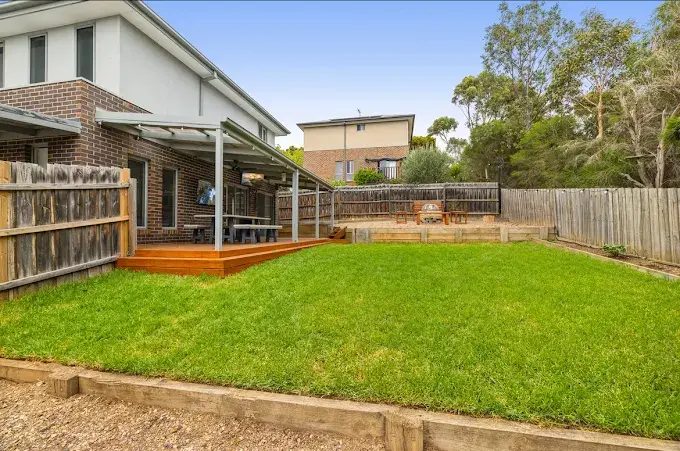
Lawn is the enemy of a low-maintenance commercial garden. It needs mowing, edging, watering, weeding, and constant attention. If you’ve got a big patch of grass at your office, it’s eating a huge chunk of your groundskeeping budget.
The alternative: replace some or all of that grass with hardscaping.
Gravel, pavers, crushed rock, stone pathways. They look sharp. They don’t need mowing. They don’t need watering. They don’t die. And they add structure and polish to the space.
You don’t have to pave everything. Even just converting the awkward corners, the bits that are hard to mow anyway, makes a difference. The remaining garden beds become easier to manage because you’re not navigating around a lawnmower.
Quick tip: Gravel is cheap and easy to install, but it needs edging to stop it spilling into garden beds. Pavers on a proper base last decades. Either way, it’s less work than grass.
Mulch is the most underrated tool in commercial landscaping. A good layer does three things:
For a commercial property, you want coarse, chunky mulch. Fine mulches break down too fast. Coarse mulch lasts longer and stays put during heavy rain.
How much? About 75mm to 100mm deep. More than that and you risk smothering plants. Less and the weeds push through.
Top it up every year or two. That’s the maintenance. That’s it. Compared to mowing, weeding, and watering a bare garden bed, mulch pays for itself.
Some plants need constant pruning to look decent. Others just grow in a nice shape and stay that way. For a commercial garden, you want the second type.
Structural plants naturally grow into a tidy form. They don’t sprawl. They don’t get leggy. They just sit there looking like they’ve been trimmed even when they haven’t.
Examples that work in Melbourne:
These plants look intentional. They don’t need to be shaped and fussed over. They just do their thing.
Simple idea. Saves a lot of hassle. If you mix thirsty plants with drought-tolerant ones, you end up overwatering some and underwatering others. Nobody’s happy.
The fix: group plants by how much water they need.
Put your water-loving plants together in one area, ideally somewhere that gets runoff or holds moisture. Put your drought-tolerant natives together in another spot, especially if it’s hot or exposed.
Why it matters for commercial properties:
A grouped garden is easier to water efficiently. You can set irrigation zones to match the plant groups. You’re not wasting water on plants that don’t need it, and you’re not starving the ones that do.
It also makes the garden look more designed. Groups of the same plant create rhythm. Simple trick. Big difference.
Hand-watering is a time sink. Someone has to remember to do it. They drag hoses around. They guess how much water each plant needs. On a commercial property, that adds up to hours every week.
Drip irrigation solves all of that.
You run drip tubing through your garden beds. It delivers water directly to the base of each plant, slowly, so it soaks in instead of running off. Put it on a timer, set the frequency, and forget about it.
Why drip beats sprinklers:
Once it’s set up, your garden waters itself. You just check the timer occasionally and make sure the emitters aren’t blocked.
If your office has a courtyard, rooftop terrace, or paved entrance area, containers are a smart move.
Why containers work for commercial spaces:
What to plant in containers:
Anything compact that doesn’t mind being pot-bound. Ornamental grasses, small shrubs, some herbs. Succulents are great for sunny spots — they need almost no water.
A note on maintenance: Containers do need watering, especially in summer. But set up a drip line to them too and they’ll be fine. Because you control the soil, you’re not fighting the ground underneath.
Idea | Main Benefit | Best For |
Native grasses and shrubs | Survive on rainfall, look good year-round | Garden beds, edges, car parks |
Hardscaping | Eliminates mowing and watering | High-traffic areas, awkward corners |
Mulch | Stops weeds, locks in moisture | All garden beds |
Structural plants | Hold their shape without pruning | Formal entrances, feature beds |
Grouping by water needs | Efficient watering, better design | All planted areas |
Drip irrigation on timer | Waters itself, saves time and water | All garden beds and containers |
Containers | Flexible, movable, controlled soil | Courtyards, rooftops, paved areas |
A low-maintenance office garden comes down to making smart choices early. Pick tough native plants. Use mulch to keep weeds down. Group plants by how much water they need. Set up drip irrigation so it waters itself. Add some hardscaping to cut down on mowing. That’s the whole approach.
If you want a commercial landscape that looks sharp without eating your budget, get in touch. Reach out to Bullscapes for commercial landscaping Melbourne-wide.
The upfront cost is higher. You’re paying for design, proper planting, irrigation setup, maybe some hardscaping. But the ongoing cost drops dramatically. Most businesses find the investment pays for itself within two or three years because they’re not paying for weekly mowing, constant watering, or replacing dead plants every season.
Depends on what you’re changing. Swapping plants or adding mulch usually doesn’t need approval. But if you’re adding hardscaping, changing drainage, or removing significant trees, you might need a permit. Check with your local council before you start. Quick phone call. Saves a headache later.
You can plant things yourself. But getting the layout, irrigation, and plant selection right is where the real work is. A professional saves you from costly mistakes — like planting the wrong species in the wrong spot or setting up irrigation that doesn’t reach everything. For a small courtyard, DIY might work. For anything bigger, it’s worth getting help.
If you’ve set up drip irrigation on a timer, the garden handles it fine. That’s the whole point. The irrigation tops up what the rain doesn’t provide. If you haven’t set up irrigation, you’ll need to water manually during dry spells. Native plants are tough, but even they need a drink when it’s really dry.
Yes. In fact, it’ll probably look better than what you’ve got now. A lot of office gardens look messy because nobody has time to maintain them properly. A low-maintenance design means the garden stays looking sharp all year, even when nobody’s paying attention to it.