
Most new backyards in Wollert start out the same way. A strip of dirt, a few weeds, a colourbond fence all round, and a builder’s leftover pile of rubble in one corner. Nobody’s fault. The house takes up most of the block, and the yard gets whatever’s left.
The thing is, you can’t add square metres. But you can change how the space works, and that changes how big it feels. Plenty of tiny yards feel roomy, and plenty of large ones feel awkward. It comes down to a handful of decisions.
Because there’s nothing to look at, and nothing to do.
When you stand at the back door and see one flat rectangle with a fence at the end, your eye hits the fence straight away. That’s it. Yard done. Add a clothesline, a few pots and a barbecue in random spots, and now it’s a small yard and a messy one.
Wollert throws in another problem. The soil here is heavy reactive clay, which swells when it’s wet and shrinks when it’s dry. So bare ground goes boggy in winter and cracks open in summer. You end up avoiding the yard for half the year, and a space you avoid always feels smaller.
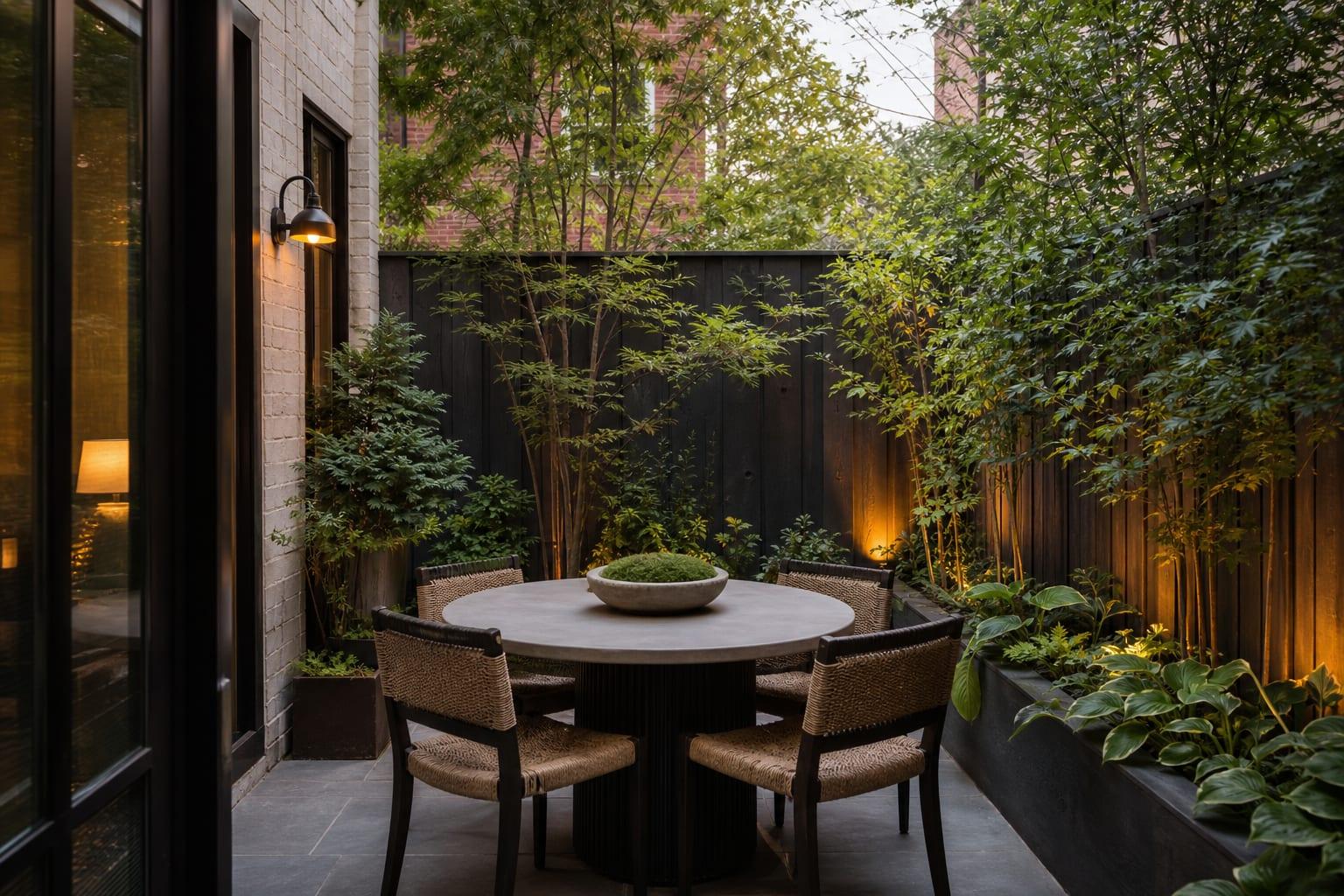
It can, and it’s usually the biggest single change you can make.
A lot of blocks around the creek and reserve areas tilt down toward the back. That tilt eats space. You can’t put a table on it, you can’t kick a footy on it, and the kids slide off it. So a quarter of your yard is basically decoration.
Build a retaining wall and suddenly you’ve got a flat patch where the slope used to be. Better still, split the slope into two levels. A flat area by the house for the table and chairs, then a step down to the lawn or garden. Two levels give a small yard a bit of shape, and shape is what makes a place feel bigger, because your eye has more to travel across.
Just don’t rush it. On clay, a wall needs proper footings and somewhere for water to go. In heavy rain, water builds up behind a wall and pushes on it. If it can’t drain out, the wall slowly leans. That’s the classic reason retaining walls in Melbourne start looking dodgy a few years in.
More than most people expect.
Think about walking into a room where the floor changes every two steps. Tiles, then carpet, then timber. It feels chopped up. Outdoors is the same. Pick one paving and run it from the back door out into the yard, and the whole space calms down and looks longer.
Go for a lighter colour if you can. Pale and mid-tone pavers bounce the light around and make a tight space feel open, whereas dark paving in full summer sun gets hot and heavy. Big pavers also help, since fewer joins means less to look at. And if you lay them on a diagonal, your eye gets pulled across the yard, which makes it look wider than it is.
Here’s the part nobody talks about, because you can’t see it. The base underneath. Wollert clay shifts, so pavers laid on a rushed base can dip, tilt or even start sinking or moving within a couple of years. Good paving is really about the digging and compacting that happens before a single paver goes down.
Often, yes, particularly on a sloping block.
A deck lifts your living space up to door level. You step out from the kitchen and you’re already outside, no muddy strip in between. It works like an extra room, and you don’t have to give up much of the yard to get it.
It’s also a sensible answer to uneven ground. Trucking in lots of fill to level a yard isn’t always smart on clay. A deck can sit above the slope instead, and the space underneath can hold a bit of storage.
Timber looks warm and natural. Composite needs less upkeep. Both are fine, as long as the footings suit the soil. A deck sitting on shallow footings in reactive clay can start to bounce or shift after a season or two, and that’s an annoying fix.
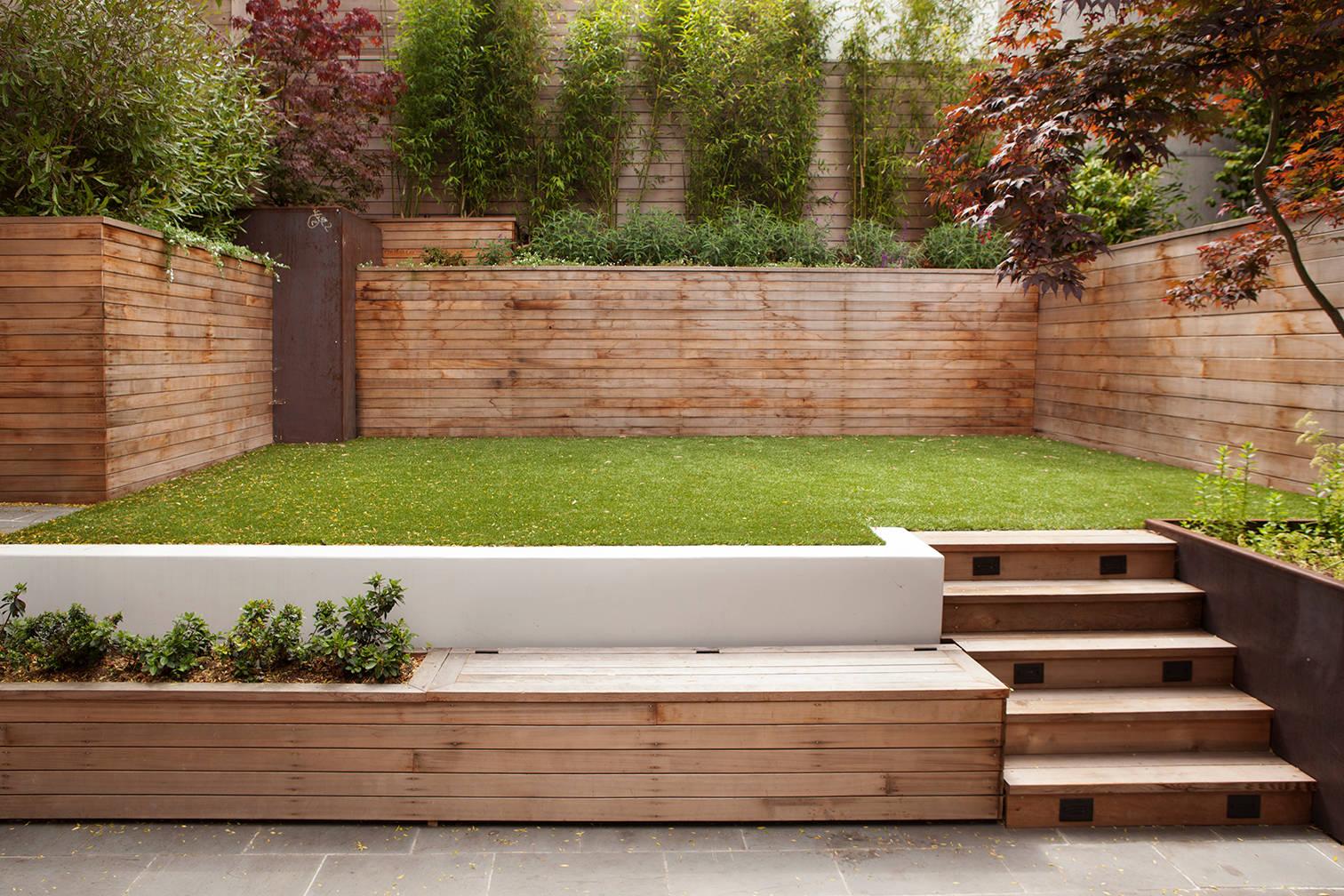
Honestly, it depends how much you like mowing.
Real grass is lovely underfoot, but in a small yard every bare patch shows. It needs watering in summer, and on heavy clay it either sits in a puddle or bakes into a hard, patchy mess. Plenty of people end up frustrated within a year.
That’s why more locals are going with instant turf installation. It’s green in February, green in July, and it doesn’t turn to mud when the dog comes inside. Even a small strip along a paved area makes a yard look finished.
Same rule as paving, though. It needs a well-drained, compacted base. Turf laid straight onto soft clay can hold water and move around.
By holding back.
The temptation in a small yard is to cram in everything, and it usually ends up looking like a plant shop. Try planting along the fence line and leaving the middle clear. Choose tall, slim plants over wide ones, since tall shapes draw the eye up and make the space feel taller. And stick to a short list. The same two or three plants repeated looks tidy. Ten different ones looks messy.
Raised garden beds help too. A low wall around a bed keeps soil off your paving and gives the garden a clean edge. It also lifts plant roots out of soggy clay, which they’ll appreciate.
A few, and none of them need a big budget.
Paint the fence a dark, muted colour. It sounds backwards, but dark fences tend to fade into the background, and the boundary seems further away. Hang a mirror or two on the fence, tilted slightly and half hidden by plants, and it can suggest more space behind. Grow climbers up a trellis so you’re using height instead of floor.
Lighting is a big one. A few soft lights along a path or under the deck edge make the yard usable after dark, and they blur the boundaries, so the space seems to keep going past the fence. Then there’s furniture. One decent table beats three mismatched ones, and a bench with storage under the seat clears away the clutter that makes small yards feel worse.
Because Wollert is not like most of Melbourne.
The clay here moves. Winters are wet, summers are dry, and newer estates often have filled or disturbed soil that behaves differently again. A design that looks perfect on a plan can fall over fast if nobody thought about drainage, footings and bases. That’s true of nearly every job, from a small patio to a full backyard makeover, and it’s why good landscaping in Wollert starts underground. There are plenty of ideas in the residential landscaping range if you want more inspiration.
If you’re staring at your yard wondering what to do first, try this order:
Do it in that order and you won’t have to pull up something nice to fix something boring.
A small backyard doesn’t need a huge budget or a huge block. It needs a plan, a solid base and a few sensible choices about levels, surfaces and light. Get those right and a tight space can feel open and easy to enjoy, whatever the season.
If you’re thinking about landscaping in Wollert and want a second opinion on your block, Bullscapes has been building retaining walls, paving, decking and more across Melbourne’s north for over 20 years. Call 0421 562 301 or book a free on-site quote.
Clear the clutter, keep colours light and simple, plant along the fence and add some lighting. A fresh coat of paint on the fence costs very little and helps a lot.
Yep. Reactive clay movement can affect foundations, especially older homes or ones built without proper footing design. Most Melbourne sites are classified as reactive clay (Class M, H1, or H2). That’s why footing design matters so much here.
Yes, if it’s laid on a compacted, well-drained base. That stops water pooling underneath.
If your yard slopes, it can give you flat, usable space. Height, soil and drainage decide which type suits, so get the slope looked at first.
Sometimes. It depends on the wall’s height and how close it is to a boundary. Check with your local council or ask a landscaper before you start.