Notice your paving looking a bit wonky lately? Fence posts leaning? Water sitting in the same spot every time it rains?
Yeah, that’s the clay. We deal with it on almost every job across Melbourne’s west and north. This stuff swells up like a sponge in winter, then dries rock-hard in summer. That constant back-and-forth puts everything on top of it through hell; paving, walls, fences, even your plants. Understanding clay soil problems Melbourne homeowners deal with is the first step to actually fixing them.
Reactive clay changes size depending on moisture. Simple as that. Rain comes, clay soaks it up and swells. Summer hits, it dries out and shrinks back. This happens over and over, year after year, forever.
And Melbourne’s got heaps of it. The basaltic clays in the northern and western suburbs are especially reactive. Places like Melton, Werribee, Tarneit, Craigieburn; built right on some of the most reactive soil in the city.
This isn’t a small thing. Reactive clays cause more failures in Australia than almost anything else, particularly for lighter structures like houses and pavements. Ground moves, everything on it moves too.
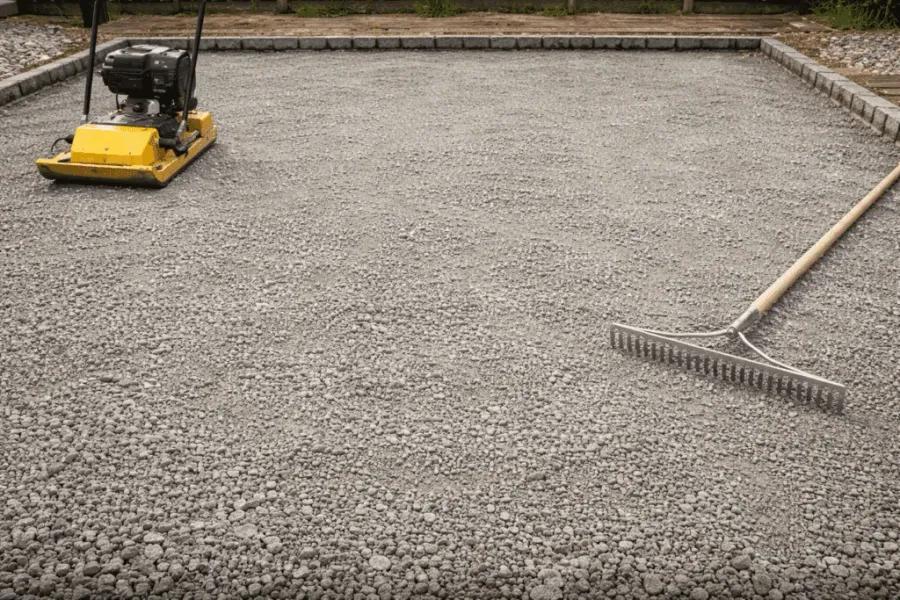
Paving sits right on the ground. When clay underneath swells or shrinks, the paver starts sinking and moving. One bit lifts, another sinks. And then the next thing you know; cracks, uneven surfaces, trip hazards everywhere.
And here’s the kicker. This often happens within a year or two if the base wasn’t done properly. You can’t just chuck pavers over existing clay and hope for the best. Soil needs excavating, a proper base needs building, drainage needs sorting. All before anything goes on top.
We always start with the ground. Not the pavers. If the base is rubbish, everything above it will fail. No exceptions.
Big time. Retaining walls hold back soil, so they’re constantly fighting ground pressure. When that ground is reactive clay, the pressure changes as soil swells and shrinks.
Footings not deep enough? Drainage behind the wall is not right? That wall will shift, lean, or crack. We’ve seen walls look perfectly fine for a year or two, then suddenly start leaning because clay behind them expanded during a wet winter.
For sloping blocks or areas with really reactive clay, retaining walls need proper footings, drainage, and site prep to stay stable as conditions change. Don’t cut corners on this one.
Clay doesn’t drain. At all. Water just sits there on top instead of soaking through. Your yard becomes a swamp after heavy rain.
Two problems come from this. First, standing water kills grass and plants that hate wet feet. Second, all that moisture feeds into the clay, making it swell even more. More swelling, more movement. Vicious cycle.
Melbourne’s clay gets waterlogged in winter, then bakes solid in summer. That constant cycle is brutal on everything; plants, paving, walls, your patience.
Problem | What You’ll Notice | Why It Happens |
Paving movement | Cracks, uneven surfaces, sinking | Clay swells and shrinks, moving the base |
Retaining wall failure | Leaning, cracking, bulging | Changing soil pressure behind the wall |
Poor drainage | Water pooling, soggy patches | Clay doesn’t let water drain through |
Plant struggle | Yellowing, stunted growth, root rot | Waterlogged soil suffocates roots |
Fence post movement | Leaning fences, loose posts | Soil movement pushes posts out of alignment |
You can’t replace all the clay. It’s metres deep in some spots. But you can work with it.
Preparation is everything. For paving; excavate to the right depth, build a proper base with crushed rock, and sort drainage. For retaining walls; deep footings, drainage behind the wall. For gardens; improve soil with organic matter, pick plants that actually like clay.
Stop fighting the clay. Start understanding how it behaves. Build accordingly.
Watch how it behaves. Sticky and clumpy when wet? Rock-hard and cracking when dry? Probably reactive clay. A soil test before any major project is worth the money.
Yep. Reactive clay movement can affect foundations, especially older homes or ones built without proper footing design. Most Melbourne sites are classified as reactive clay (Class M, H1, or H2). That’s why footing design matters so much here.
Australian natives handle clay better than most exotics. They’re built for local conditions. Improving soil with compost and mulch helps too, but drainage comes first.
Smart move, actually. Raised beds let you control soil quality without fighting clay underneath. Just make sure drainage goes in the base so water doesn’t sit and stagnate.
The northern and western suburbs cop the worst of it. Melton, Bacchus Marsh, Werribee, Craigieburn, all known for highly reactive clay. Eastern suburbs have clay too, but it varies.
We’ve been landscaping across Melbourne for 20 years. Clay soil shows up on almost every job. You can’t ignore it. You can’t fix it with a quick patch. But you can plan for it.
Noticing paving movement? Drainage issues? Retaining walls not looking right? Worth getting someone to take a proper look. The earlier you deal with clay soil problems, the less damage they cause.
We work with homeowners across Melbourne’s west and north; from Bacchus Marsh and Melton through to Caroline Springs, Deer Park, and Sunshine. Planning a landscaping project on clay soil? Contact us.
We’ll look at your soil, talk through options, and give you honest advice about what your ground can actually handle.