You’ve been dreaming about that deck for years. Sunday barbecues. Morning coffees in the sun. A proper outdoor space where the kids can run around and you can finally host Christmas lunch without everyone cramped inside.
But before you pick up the phone and start getting quotes, there are a few things you really need to think about. Because a deck that looks amazing on day one but starts squeaking, fading, or falling apart after a couple of years? That’s not a dream – that’s a nightmare.
We’ve been building top decking in Melbourne for over two decades, and we’ve seen the good, the bad, and the downright ugly. Here are the seven questions every homeowner should ask before building a deck and why getting them right from the start saves you a world of headaches down the track.
This sounds obvious, but you’d be surprised how many people skip this step.
Are you building a deck for entertaining? A quiet retreat? A place for the kids to play? A pool surround? Each use case changes everything; the size, the materials, the layout, even the height off the ground.
If you’re planning to host big gatherings, you’ll want a spacious design with room for outdoor furniture and maybe a built-in bench or two. If it’s more of a private sanctuary, you might prioritise a smaller footprint with some clever screening for privacy.
Here’s the thing: once you know what you actually want to do on your deck, everything else falls into place. The size becomes obvious. The layout makes sense. And you won’t end up with a deck that’s beautiful but completely impractical for how you actually live.
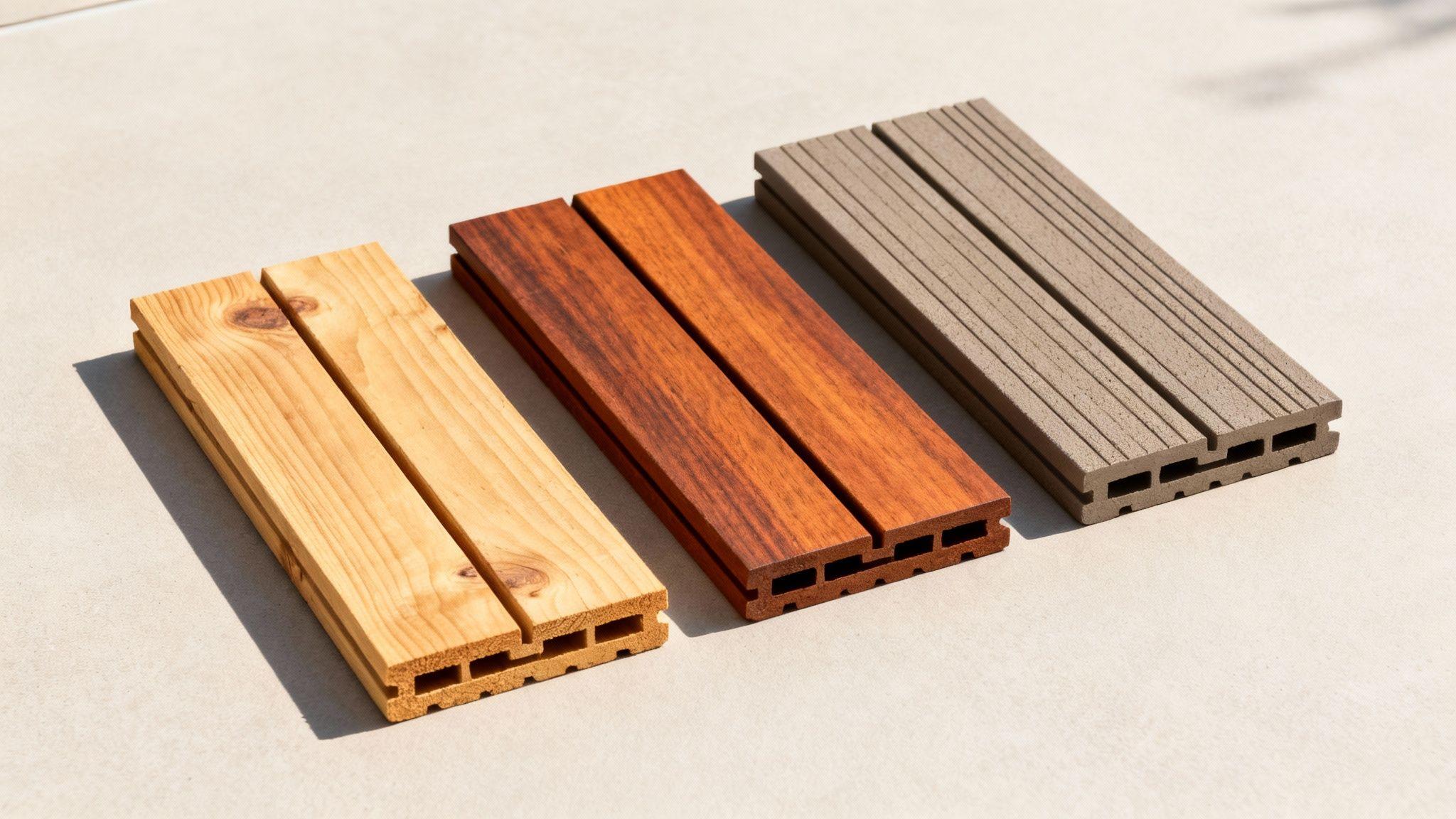
This is the big one. Melbourne’s climate is notorious; scorching summers, chilly winters, and rain that can appear out of nowhere. Your decking material needs to handle all of it.
Timber decking is the classic choice, and Melbourne homeowners have plenty of options:
Merbauremains one of the most requested timbers. It offers an excellent balance of appearance, durability and affordability, perfect for entertaining decks and alfresco areas. One caution: merbau contains natural tannins that can leach and stain in the first months, so we generally steer poolside projects toward other options.
Spotted Gum is a premium hardwood with a modern Australian appearance and exceptional durability. Its natural colour variation makes every deck unique, and its Class 1 durability makes it ideal for heavy-use family decks.
This is popular with homeowners looking for lighter contemporary colours. Its excellent hardness and natural BAL-29 rating make it a practical choice for properties in bushfire-prone areas.
They are dense, long-wearing hardwoods for a deep, premium finish. Ironbark’s density makes it one of the most durable choices for exposed, weather-hammered locations like rooftops and west-facing decks.
Treated Pine is a cost-effective option for painted or stained decks and understructures, it remains the standard material for the subframe beneath almost every deck we build.
Composite decking has become increasingly popular among busy families because it provides the appearance of timber without the ongoing oiling, staining or sealing required by traditional hardwoods. We regularly install trusted brands including Ekodeck, ModWood and Trex. It’s our most common recommendation for pool surrounds, no splinters, no water staining, slip-resistant textures and for rooftop terraces and balconies where ongoing maintenance access is difficult.
Which is right for you? That depends on how much time and money you want to spend on upkeep. If you love the look and feel of real timber and don’t mind the maintenance, go hardwood. If you want something that’ll look great for years with minimal effort, composite is worth a serious look.
This is the question nobody wants to ask and the one that causes the most headaches when people skip it.
In Victoria, a building permit is generally required for decks higher than 800mm above ground level, decks attached to the home, and larger structures, with requirements administered under Victorian Building Authority regulations. Decks built near a pool or spa must also comply with pool safety barrier rules, which affect gate placement, fencing and deck height around the water’s edge.
The best advice: check with your local council before you do anything else. A good deck builder will handle the permit process for you, at Bullscapes, we identify permit and compliance requirements during the design stage, so there are no surprises mid-build.
Skipping this step can mean fines, delays, or even having to tear down your new deck. Not fun.
Location matters more than you might think.
Sun exposure. Which way does your yard face? A north-facing deck gets sun all day, great in winter, but scorching in summer. You might need shade solutions like a pergola or adjustable awning. A south-facing deck stays cooler but might feel gloomy in winter.
Wind. Melbourne’s known for those blustery days. If your yard is exposed, you might want to position your deck in a sheltered spot or plan for windbreaks like screens or planting.
Access and integration. How will you get from the house to the deck? And how does it connect with the rest of your outdoor space? Every Bullscapes deck is designed to integrate with your garden, paving, pool area, retaining walls melbourne and surrounding landscape, creating a finished outdoor area that feels connected rather than added on later.
Views and privacy. What do you want to look at? And more importantly, what do you want to hide? Positioning your deck to capture a nice view or screen out an ugly fence, can make a huge difference to how much you enjoy the space.
Be honest with yourself here.
Timber decks need regular love. Oiling at least once a year. Cleaning to prevent mould and algae, especially in Melbourne’s damp winters. Checking for loose boards or popped nails. Sanding and resealing every few years.
Composite decks? A quick sweep and an occasional wash with soapy water. That’s it.
If you’re the type who enjoys weekend projects, timber might be a labour of love. If you’d rather spend your weekends actually using your deck instead of maintaining it, composite is the smarter choice.
There’s no wrong answer, just different trade-offs. But knowing what you’re signing up for before you build is a lot better than discovering it afterwards.
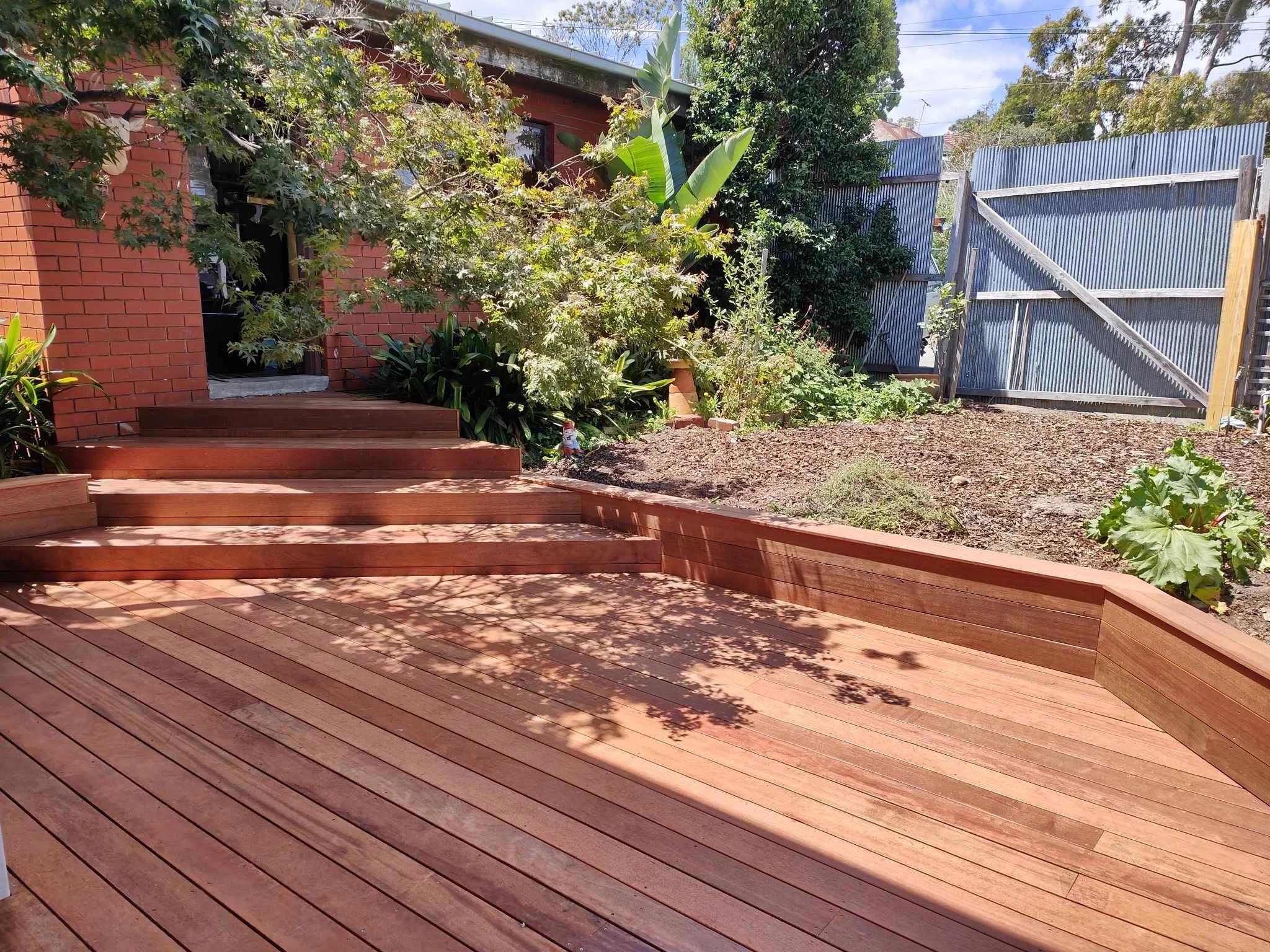
This is the part that’s easy to overlook because it’s not pretty. But a deck is only as good as what’s underneath it.
In our experience, Melbourne homeowners often spend considerable time choosing decking boards but overlook the importance of the subframe. A well-constructed subframe determines how stable, quiet and durable the deck will remain over the next 20 years.
Posts and footings. Your deck needs proper support, concrete stumps or screw pile footings suited to your soil and site.
Bearers and joists. These are the structural bones. They need the right size and spacing for the load they’ll carry. Skimping here means a bouncy, unstable deck.
Ventilation and drainage. We plan joist spacing, ventilation gaps and drainage falls so the structure stays dry, stable and squeak-free through Melbourne’s changing conditions. Inadequate drainage beneath the deck is one of the most common mistakes we see during replacements.
Termite protection. In Melbourne, termites are a real concern. If you’re building with timber, you’ll need proper barriers and treated timber where it contacts the ground.
A good deck builder will get all of this right. But it’s worth understanding what goes into a solid foundation so you can spot a dodgy quote when you see one
Here’s the thing about top decking in Melbourne, anyone with a hammer can call themselves a deck builder. But that doesn’t mean they should.
Ask about experience. How long have they been building decks? Have they worked on projects like yours before? Bullscapes has been designing and constructing custom decking in Melbourne for more than 20 years.
Check their credentials. Are they licensed and insured? Bullscapes is fully insured and every project is completed with premium materials and a commitment to outstanding results.
Look at their work. Photos are fine, but seeing a deck in person is better. Recent projects include a raised spotted gum deck on a sloping block in Deer Park and a composite pool surround in Darley.
Read reviews. What are past clients saying? Are they happy with the finished product? Did the builder stick to the timeline and budget?
Get a detailed quote. Not just a number, a proper breakdown of materials, labour, and timelines. Bullscapes offers transparent decking costs in Melbourne with no hidden fees, providing a detailed, itemised quote during a free site inspection.
Check the process. Do they have a clear process from start to finish? Bullscapes follows a five-step process: site inspection, design consultation, engineering and planning, construction, and final inspection.
A qualified deck builder will be happy to answer all of these questions. If they get defensive or vague, that’s a red flag.
With over 20 years of experience in the construction industry, Bullscapes has built a reputation for delivering high-quality, custom decking solutions across Melbourne. From natural timber decking to low-maintenance composite decking, every deck is planned around your home, lifestyle, site conditions and long-term durability.
Bullscapes offers:
And because Bullscapes is a full landscaping company – also building pools, concreting and synthetic turf, your deck is designed to integrate seamlessly with everything around it. Levels, drainage, materials and sightlines all resolved by one team.
They service Melbourne’s west and north west, including Bacchus Marsh, Darley, Melton, Caroline Springs, Rockbank, Deer Park, Sunshine and surrounding suburbs. If you’re outside these areas, they take on projects across greater Melbourne depending on scope.
Yep, you’d think it’s obvious but plenty of folks skip this and regret it. If your deck’s more than 800mm off the ground, attached to the house, or covers a decent area, you’ll almost certainly need one. Pools have their own extra rules too. A proper deck builder will sort all this out for you during the design phase – if they don’t mention permits, that’s a red flag.
Merbau’s been the long-term favourite for years; it’s got that rich colour, it’s tough, and it won’t break the bank. But composites are catching up fast. Busy families are cottoning on to the fact that you can have a great-looking deck without spending your weekends oiling and sealing.
Once the materials hit the site, most decks are wrapped up in one to three weeks. A simple ground-level job? Could be done in a week. But if you’re on a sloping block or dealing with permits and engineering, budget three to five weeks. Weather’s always a factor too, it’s Melbourne, after all.
Look after it, oil it regularly, keep it clean, give it sand every now and then and a good hardwood deck will easily last 20 to 30 years. But here’s the thing most people miss: what’s underneath matters just as much as the boards. Get the drainage, ventilation and subframe right, and you’re giving that deck a proper shot at a long life.
Depends what you want. If you hate maintenance and just want to use your deck without worrying about it, then yes, the extra upfront cost pays off over time. Especially around pools, where timber can stain, splinter, or get damaged by water. Composites just sit there looking good with zero effort.
Poor drainage underneath. Joists spaced too far apart – makes the whole thing bouncy. Untreated timber in the framing. Not enough airflow underneath. And using the wrong fixings, which eventually rust and stain the boards. Any one of these will shorten your deck’s life significantly. Get them right and you’re golden.
Look, building a deck is one of those projects that genuinely changes how you live in your home. It’s where you’ll host birthday parties, drink your morning coffee, watch the kids play, unwind after work. It adds real value to your place too.
But it’s also a decent chunk of money and a lot of decisions. Get it wrong and you’re stuck with something that looks tired, feels unsafe, or needs constant patching up. Get it right and you’ll wonder why you didn’t do it years ago.
So take your time. Think about what you actually want to do on that deck. Pick materials that suit your lifestyle, not just what looks good in a brochure. Check the rules so you don’t get caught out. And contact Bullscapes, as we know what works in Melbourne’s unpredictable climate.