
Quick Question: Stuck staring at a muddy patch of backyard, wondering whether to roll out the green carpet or grow the real thing?
Melbourne’s weather, soil, and council rules make this a genuinely local decision, not a generic one. Synthetic turf wins on zero maintenance, but it gets dangerously hot in a Melbourne summer and some councils won’t let you put it out front. Real grass needs water and patience, but it’s cooler, softer, and a lot easier to get approved.
Melbourne doesn’t give you one season. It gives you four in a day, a scorching February, a frosty July morning, and a downpour that turns your backyard into a shallow lake.
Real grass handles that swing pretty well, if you pick the right variety. Sir Walter Buffalo is the safe all-rounder for Melbourne: soft underfoot, shade-tolerant, and it copes with frost. TifTuf Bermuda is the drought warrior, bred to stay green with less water and recover fast from traffic. Both are proven local choices, and both need a proper base to thrive.
Synthetic turf doesn’t care about frost. It stays green through everything. But that’s exactly the problem in summer. The plastic surface absorbs heat instead of cooling through evaporation, and in a Melbourne backyard experiment it ran almost twice as hot as watered real grass. If you’ve got kids, dogs, or bare feet running around in January, that number matters.
It’s not a myth, and it’s not a minor annoyance. It’s a safety issue.
The University of Melbourne study measured artificial turf in a suburban backyard over 51 days of summer. The surface hit 72°C. For context, adult skin can suffer irreversible burns at 48°C after about ten minutes and children’s skin burns at a lower temperature because it’s thinner. At 72°C, the damage happens in seconds, not minutes.
That doesn’t mean synthetic turf is evil. It means you need to think about where it goes and how it’s used. A shaded side yard or a low-traffic area is a very different proposition from a full-sun backyard where the dog spends all afternoon. Some installers offer cooling infill, and shade from trees or a pergola makes a real difference. But if the plan is a blazing hot patch of fake grass with no shade and barefoot kids, Melbourne’s summer will find you out.
Most guides skip this bit. It’s also the bit that decides whether your new lawn lives or dies.
Dig a hole in half the backyards around here and you’ll hit it. Grey, orange, sometimes yellow clay sitting under a thin layer of topsoil. It holds water like a bucket in winter, then sets like concrete in summer. Water sits on top instead of draining through.
Real grass struggles with that. The roots can’t push down, so the lawn stays shallow and dries out fast once the hot weather hits. Synthetic turf has the same problem in reverse. Water can’t soak through the plastic, and the clay underneath won’t take it either, so it pools under the surface where you can’t see it.
The fix is the same either way. Rip up the old surface. Check which way the ground falls. Sort the drainage. Then build the base properly. For real turf that means 80 to 100mm of decent underlay. For synthetic it means crushed rock and crusher dust, compacted down and pinned at the edges.
Clay is a bigger subject than one paragraph, and if you’ve ever wondered why your yard does what it does after rain, this piece on Melbourne clay soil backyard problems explains it properly. Worth a look before you order anything.
It depends on your suburb, your zoning, and whether the spot is visible from the street.
Most suburban councils will allow synthetic turf as long as the surface stays permeable and stormwater doesn’t become a problem. But heritage zones, think parts of Brunswick, Fitzroy, or Williamstown; can be much stricter, and some councils actively discourage or prohibit artificial turf in publicly visible front areas. One Melbourne council has explicitly said its landscape guidelines and climate strategy don’t permit artificial turf in visible front sections of developments.
Natural grass doesn’t usually trigger the same planning questions. It’s the default, the expected, the thing councils assume a front yard will have. If you’re set on synthetic out front, a five-minute call to your local council before you order anything is the cheapest insurance you’ll ever buy.
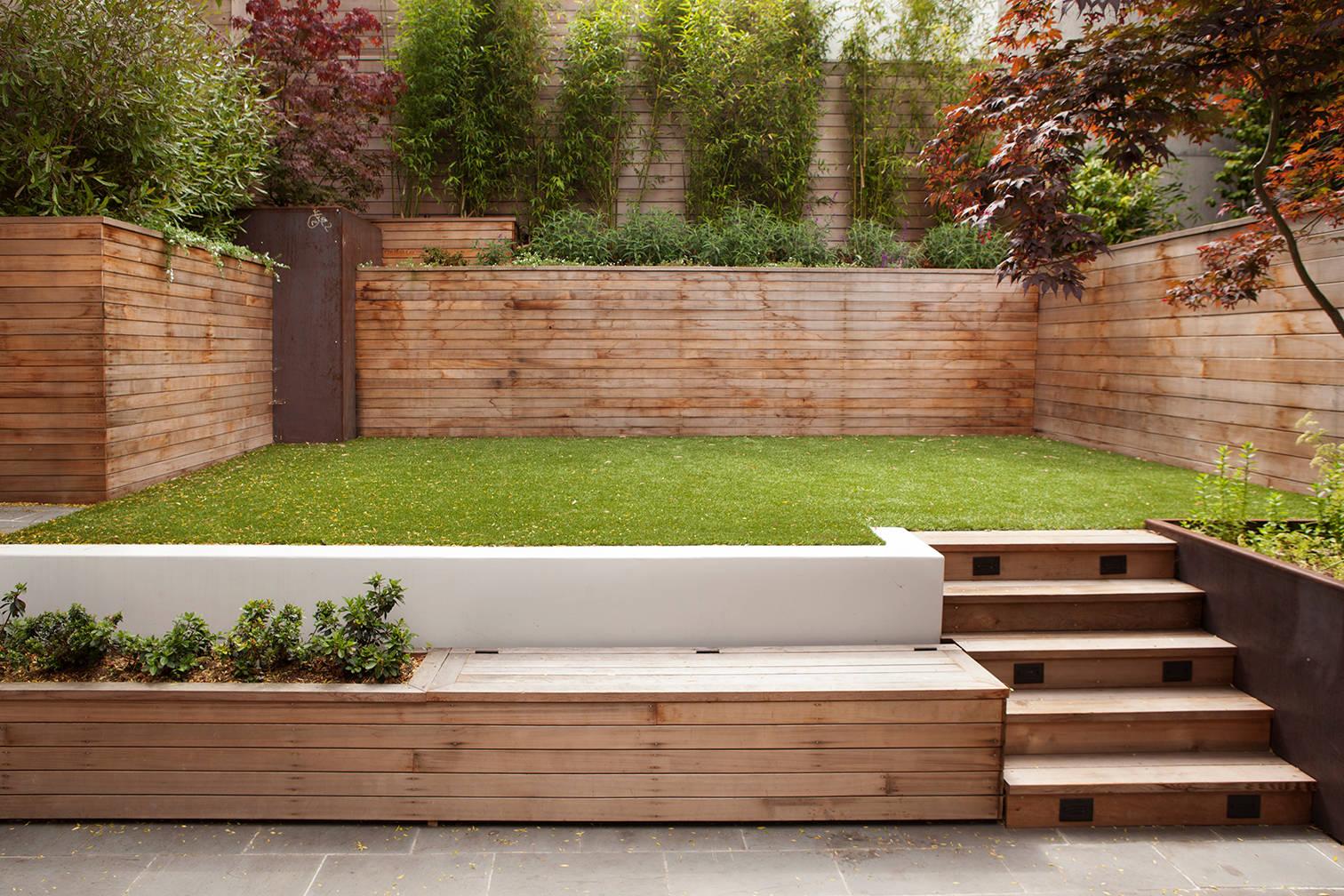
The sticker prices have converged more than most people realise.
Natural turf, including Sir Walter Buffalo, typically starts around $60/m² installed, covering supply, ground prep, and labour. Basic synthetic turf also starts around $60/m², with premium synthetic (denser pile, more realistic finish) from around $75/m². Across Melbourne, artificial turf installation generally lands between $40 and $95 per square metre depending on the product and site conditions.
So the upfront gap isn’t huge. The real difference is what happens next. Natural grass costs money every year; water, fertiliser, maybe a mow service if weekends are precious. Synthetic costs almost nothing to maintain but has a lifespan. Quality synthetic turf can last 10 to 25 years depending on the product and how it’s treated, and then it has to be disposed of and replaced. Natural grass, looked after properly, just keeps going.
If you’re going natural, instant turf installation Melbourne is the phrase to look for, it means fresh-cut turf delivered and laid the same day, not seed that takes months to fill in. The good operators measure on site, quote one price covering ground prep, turf, delivery, and laying, and finish most yards in a day.
The sequence matters more than the product. Strip the old lawn. Fix the levels and drainage. Import and blend the underlay. Roll it firm. Lay the turf the day it arrives. Water it in. Then keep foot traffic off it for two to three weeks while it roots. Skip the prep and you’re just renting green for a season.
If you’re going synthetic, the same logic applies in reverse: the base is everything. A rushed base on Melbourne clay will show up as wrinkles, pooling, and weeds within a year. A proper base with drainage holes and anchored edges is what makes the “low maintenance” promise actually true.
There’s no universal winner. There’s only the right call for your block, your budget, and your household.
Go natural if you want the coolest surface underfoot, you’re happy to water within the rules, and you like the idea of a lawn that gives something back to the soil and the street. Pick Sir Walter for shade, TifTuf for drought, and invest in the prep.
Go synthetic if you travel a lot, you’re done with mowing, and the spot you’re covering isn’t a full-sun barefoot zone. Check your council rules first, insist on a proper base, and don’t pretend the heat issue doesn’t exist; shade it, cool it, or put it somewhere that isn’t the main play area.
Either way, the Melbourne-specific bit is the same: sort the soil, sort the drainage, and sort the council question before anything gets delivered.
Choosing between real grass and synthetic turf in Melbourne isn’t a coin flip, it’s a local decision, and the details matter. If you want the prep done properly, the drainage sorted for Melbourne clay, and the turf laid the day it arrives, contact our Bullscapes landscape team for Instant Turf Installation Melbourne. We’ll walk your block, talk through the options honestly, and tell you what your soil is actually going to do before you spend a cent.